Leaderboard
Popular Content
Showing content with the highest reputation on 12/06/2023 in all areas
-
6 points
-
6 points
-
4 points
-
4 points
-
4 points
-
3 points
-
3 points
-
3 points
-
3 points
-
3 points
-
2 points
-
That must have hurt during the decal heat transfer. I would have tucked my necklace in.2 points
-
2 points
-
2 points
-
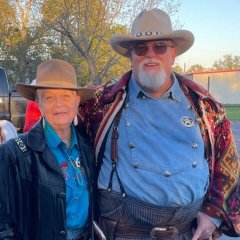
Yeah, that face it America is definitely photoshopped. And the first one, the I in IF is not on his shirt, it's on the rifle receiver.2 points
-
2 points
-
2 points
-
2 points
-
2 points
-
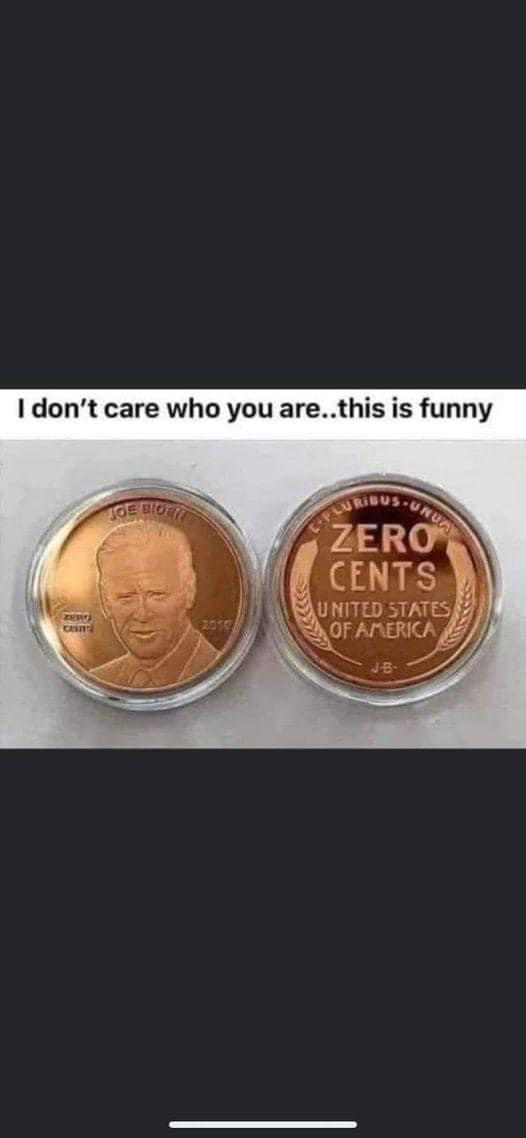
That's only funny if you've never done it yourself...and just never you mind how I know.2 points
-
2 points
-
2 points
-
2 points
-
1 point
-
1 point
-
1 point
-
1 point
-
1 point
-
1 point
-
1 point
-
Hello our US Friends! Time passes quickly and the year 2023 slowly fades into oblivion. We can already see the upcoming Christmas on the horizon, followed by the New Year 2024. On this occasion, we would like to wish you all the best, lots of health and happiness, a peaceful Christmas and lots of joy spent with your loved ones.1 point
-
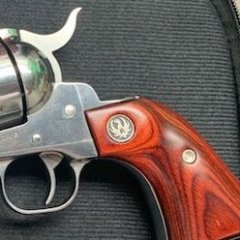
I also notice lack of trigger finger control. Booger hook is on the bangswitch.1 point
-
The lettering does not follow the creases in the t-shirt. There is a lot of that sort of photoshoping going around the internet.1 point
-
1 point
-
You suppose that's just some random picture of him, or is it a screenshot from that Val Kilmer FBI movie?1 point
-
1 point
-
1 point
-
1 point
-
they did come with a V8,on occasion, and the above examples certainly did ....... ..... but mostly a straight 6; and a 3 speed column shift, or 4-on-the-floor manual transmission, in some cases a tri-matic auto transimssion. Mostly for delivery and/or tradesmen, but also as a surfing wagon with a mattress in the back and board racks on the roof. Most had a bench seats although the examples above probably had bucket seats. Great as a grocery getter, but useless as a family conveyance. Holden was a General Motors subsidiary. GMH1 point
-
I am trying , without success , to figure out what it reminds me of (CAR) , maybe make it L/H drive and poke a V8 in it (BIG BLOCK) could be a fun grocery getter CB1 point
-
BREAK THE GLASS The Ambassador was not fooled by Marnie's closed eyes. She sat on a rock shelf, high on a sheer cliff face, the only access a narrow path that led to another great flaw in the geology, which allowed another rocky, but slightly broader, path, down to a hanging meadow. The Ambassador knew there was a saddled horse below, a great, shining-black mare without bridle or bit, contentedly cropping grass where she'd grazed before, near a little stream that chuckled and whispered secrets to the rocks as it paused, pooling twice in places big as a man's hat, before narrowing and slipping modestly between clefts in fractured granite, to disappear downhill, like a maiden hiding her virtue from possessive eyes. Marnie never moved as the Ambassador took a step, as he removed his pearl-grey cover. "May I join you?" he asked quietly, not wanting to disturb the isolated stillness, his eyes on Marnie's thumb, laid across the twin hammers of the cut-down twelve-bore. "Have a set," Marnie murmured. The Ambassador sat gratefully, unconsciously pushing himself back against the granite backrest, not realizing until after he'd done so, that he was pushing himself as far away from that sheer drop not two feet in front of his boot toes as he possibly could. He placed his hat on his lap, looked out over the distance. "I'm surprised you're here." "I was concerned you might be ... intemperate." Marnie never opened her eyes, but she did smile, just a little, then she intoned in a truly terrible New York accent -- just like she'd heard her Daddy say on such occasions -- "Does yas knows me or what?" The Ambassador smiled, just a little: matter of fact, he almost chuckled, for she'd used that nasal voice before: he had no idea its antecedents, he only knew she spoke thusly when her mood was improved from its former fury. "It would not be wise to slam your native world's face into the knowledge that their colony is much more than what it was," he said carefully. "I know," she replied. "Nor would it be prudent to simply ride into town, you -- a most remarkable and well-known person, on a very recognizable horse, looking so very at home, when you're supposed to be on another planet in a barely-surviving colony." "I know that too." Marnie opened her eyes, turned her head, looked at the Ambassador. "Daddy told me about this place when I was a little girl," she said. "This is the High Lonesome. Old Pale Eyes used to come here to be alone when he needed to think. Generations of my family have come here for that reason." "It's not easy to get up here." "No it isn't. That's why there are two generations of The Bear Killer buried here -- there's a gap in the rock, it's been a wolf den off and on -- " "Wolf den?" "Oh, yes," Marnie murmured, closing her eyes and leaning her head back against the rock face behind her. "The White Wolf." The Ambassador blinked, realizing he was about to learn something more about this most remarkable, pale eyed woman. "The White Wolf?" he echoed. Marnie's smile was thin. "Mr. Ambassador, are you familiar with the Scottish Fetch?" She did not have to look to know he'd blinked twice before replying slowly, "Nooooo ... no, I don't." "The Fetch is a ghost sheep that can be seen lying by the front door," Marnie explained, "the front door when the Laird is dying within. The worse the Fetch looks, the closer to death the man within be, and when the Fetch stands up, young and strong again, it walks through the front door and emerges with the soul of the dead and fetches the man's soul to its reward." "I see," the Ambassador replied carefully. "The White Wolf appears to our family in time of need -- a warning, a harbinger, a guardian. "My grandmother described seeing it in France." "France?" "Gammaw went to find an ancestor's grave. His revolvers are in the Museum below us, I'll show you sometime. She and the local dignitaries had a service at Joseph Keller's grave. Gammaw couldn't bring The Bear Killer -- quarantine regulations and all that -- the local gendarmerie had a canine officer, and the K9 attached himself to Gammaw's side. "When the bugler played Taps, the Malinois sat on one side of the grave, and the White Wolf paced up and sat on the other, and the two howled in harmony to the bugle's farewell." Marnie swallowed, continued. "I'm told there were troops there from the Bundeswehr and the Legion Etrangere, as well as their local Gendarmerie -- some were men Gammaw served with, in Afghanistan -- Gammaw wore a long, old-fashioned dress an old woman had in her shop, a dress sewn for another pale eyed woman decades before, and yes there's a story behind that one too -- Gammaw said that every one of those hard-as-nails, iron-willed soldiers, came up to her afterward, and kissed her on both cheeks, they saluted her and shook her hand and spoke to her, and more than one had water running down his cheek as the Malinois and the White Wolf sang their feral harmony. "They did not howl as the bugler's echo played, at the far end of the cemetery, on the little rise where an old 48 flew from the flagpole, and when the command was given to Order Arms, the White Wolf rose and shook himself, and then he turned into a twist of fog that kind of corkscrewed down into the ground, and disappeared." She tilted her head, looked at the Ambassador. "Gammaw was given a picture of the White Wolf standing beside the Malinois." "Does it still exist?" the Ambassador asked hopefully. "It does. A copy is in the Museum. I can show you." "Would that be prudent?" Marnie laughed -- a relaxed, natural laugh, something the Ambassador had not heard from her in some time. "I'll go in disguise," Marnie smiled. "I've passed for a ghost in the Museum before." The pair sat for some minutes longer. "I was worried about you," the Ambassador said finally. "You're worried?" Marnie sighed. "My husband is worried sick about me. He's afraid of stress responses and effects of long-term stress, and maybe he's right. It's been building up." "What should be done?" the Ambassador asked, his words as carefully neutral as his voice. "I should deal with it," Marnie said bluntly. "I should do like I always do, and wear a cast iron cloak and just let all that stress splatter itself against that cast iron cloak and slide to the ground dead." "Does it work?" "Generally." "And when it doesn't?" Marnie's eyes closed again; her head leaned back, rested once more against the cliff face behind her. "My Daddy," Marnie said tiredly, "has half the mandible of a Jack mule, framed in his office, hanging on the wall. The frame is bright red and there's a little brass hammer hanging from the frame by a brass chain." Marnie smiled a little at the memory. "There's a plaque on the top edge of the frame that says, "Jaw Bone of an Ass." Her eyes were still closed as she spoke, her voice as quiet as her smile. "On the bottom edge of the frame, another brass plaque: "Break Glass In Case of Emergency." The Ambassador chuckled; he'd seen a similar framed display in Marnie's Sheriff's office, and he knew that, under her pale-eyed brother's administration, it was still there, on the wall behind his high-backed, armless chair. "If it doesn't work?" Marnie lifted her head, looked at the Ambassador, her eyes that pale cornflower blue that he'd seen so rarely. "If it doesn't work, Mr. Ambassador, I go in my office and break the glass."1 point
-
1 point
-
THE CHRISTMAS LETTER Jacob considered his father's workload, he regarded his mother's industry, he looked at the stack of Christmas cards -- Angela addressed them in calligraphy, and mention was made of possibly including a note with them. Jacob smiled. He sat down at his father's computer and began to write, and when he was done, he re-read what he'd written, laughed, and proceeded to print out his own version of the year-end summary. Here's what he carefully folded, slid into every envelope with the carefully signed cards. Obligatory, Generic, Anti-Serious, Pseudo-Scientific, Christmas Card Letter! Another year has passed, blah, blah. Years always pass. Deal with it. We did stuff. We always do. Our health is generally good, except for the parts that aren’t. We obviously haven’t died yet. When we do, I’ll beg your pardon ahead of time for not scheduling two weeks in advance, as I hate interrupting other peoples’ schedules. The girls are still Collar Bone Deep in Ancestry Research. So far we've found Mama is related to an incredible number of famous people, including Princess Di and Atilla the Hun. She’s still working on Pa's side. She did find some Scottish royalty, back in Pa's Mama’s side of the family. Pa was hoping to be addressed as “Your Lordship.” He suggested that to Mama. Didn’t work. Pa tried addressing her as “Your Ladyship.” She was busy with something else and all she heard was “Your Ship.” Now she wants Pa to get her a boat. Pa was going to harken back to his redneck roots and mount an outhouse on pontoons and call it the “Royal Flush.” He described this to his beautiful bride. Mama speculated on how many strikes with an eighteen inch frying pan it would take to drive Pa through the floor like a fence post. Weather commentary is expected. It’s winter, we had snow, we’ll have more, then summer will return and it’ll get hot: remember when the Vikings discovered North America, the weather was “Global Warming” enough that Newfoundland (Canada. Ice, snow, polar bears, igloos) was known as Vinland – Vine Land – owing to the predominance of native grapes. Seasons happen. Pass the galoshes.1 point
-
STREAKER Shelly Keller very carefully laid her phone side-down on the whitewashed corral rail, turning it to keep the filly in frame. A little filly – small, all legs and speed – was running, dodging, weaving in between the other members of the Sheriff’s saddle stock, making a fast orbit of the matched white mares that pulled the Firelands Fire Department’s steam firefighting engine. Beside her, on her left, a pale eyed Keller lad, just elbow tall on her: silent in boots and Stetson and jeans that would be too short if it weren’t for his stitched boot tops, and a cuff-frayed Carhartt coat (worn, too big, but a warm and comfortable hand-me-down from big brother Jacob) – and on her right, forearms folded over the top rail, chin on his flannel shirtsleeves, her silent, watchful husband, his pale eyes tracking the filly as she ran. Shelly glanced at her husband and saw the wrinkles tightening at the corners of his eyes. Any other man would have a broad grin. Linn practiced stillness; nothing moved but his eyes, following the spotted filly. His son made up for his father’s stillness. Michael, seeing the colt running within the enclosure, stepped quietly for the gate: Shelly heard it open, heard it close, heard the latch slip easily into place, heard the brittle crackle of cellophane. Linn heard it as well, the corners of his eyes tightening just a little more as he saw three Appaloosa heads come up, as he saw them turn toward where a young Keller stood, shucking multiple mints from their noisy jackets. Michael knew the suckling was too young to properly crunch the round, red-and-white horse crack, but the nursing mare, watchful and suspicious, wasn’t: Michael stood still, his hand out, palm flat, then reached up to caress her neck as she rubberlipped the treat, then pressed her head flat against his young chest, very obviously bumming for attention and more peppermints. The filly streaked under its Mama, whirled, came back: she paid no attention to this two-legs communing with the mare, and instead investigated a meal at the equine version of the Topless Restaurant. Shelly touched the screen, shut off the video: the phone dropped into her vest pocket and she looked over to her husband. Linn had a broad grin on his face. Michael took out running across the pasture. The filly whirled, ran with him. Michael turned, ran back, the filly happy pacing him, then streaking past, running back – a man-child, and a horse-child, each running for the sheer joy of running, playing tag, and both winning. Shelly sidled closer to her husband; each ran an arm around the other, happily leaning their warmth and their strength into one other. It had been a rough couple of days. Shelly knew her husband had been first on scene for three separate tragedies: she knew he was first on scene for all three, one wreck, one drowning and one suicide by hanging – she knew how hard this triple play hit him, she knew how badly the wreck alone affected her. Shelly had been honestly worried about her husband. When a man puts enough years under the lights and siren, he’s going to soak up grief and loss enough to last ten men their lifetimes, and she knew he had: she and her father responded to only one of the three events her husband handled, and it had been bad enough to turn the stomachs of veteran firefighters – even her father, a man she’d never seen pale in the face of the worst events they’d shared, had to turn aside and empty his stomach before continuing the extrication. Linn was right in the middle of it, working with them. Their shift ended immediately after this third, this worst event of the day. They’d gone home together, stripped off in the back yard together. Linn thrust his uniform, and his wife’s, in a washtub of brine to soak out the blood, before each scrubbed off the memory of the day’s multiple tragedies in a long, hot shower, before they ate supper in absolute silence, before Linn leaned back in his easy chair in his study and stared, silently, at a spot where the wall met the ceiling, until he finally closed his eyes and slept a little, and Shelly knew that – asleep or not -- he was still seeing the day’s horrors, over, and over, and over again. Shelly leaned her head over on her husband’s shoulder and sighed with contentment, and she smiled as she felt her husband’s silent laughter at the fast moving filly, running among the herd. “I like it when you laugh,” she murmured, and she felt his arm tighten, just a little, holding her into him. “I like it when you watch with me.” Husband and wife watched in silence, laughing again at the fast moving antics of a little spotty filly, of their fast-moving son chasing after. Michael came puffing over to them, grinning, the healthy pink standing out in his cheeks, the filly hobby-horsing up to him, butting him with her nose, inviting another run. Michael rubbed the little filly’s neck, fell against the fence, breathing deep, his expression happy. He looked up at his Mama’s questioning voice. “Have you named her yet?” Linn’s reply was quiet, confident as he winked down at his son. “I was waiting to see what name suited her.” “Streaker,” Michael declared. Linn nodded, smiled just a little. “She moves like a streak, doesn’t she?” “Yes, sir!” “Our son has the right of it,” Linn said firmly, to the grinning delight of young Michael. “Streaker she is!”1 point

-
THE POPCORN FRANCHISE Sheriff Jacob Keller slammed his palm on the control panel and said quietly, "Keller, Jacob, Sheriff. Emergency override NOW!" The inner airlock door opened with a SLAM of inrushing air. Jacob stepped through the now open doorway with a blued-steel pistol barrel in the lead. He did not raise his voice. "Hands," he said, and the air in the control room chilled several degrees at the sound of his words: "Hands where I can see 'em, NOW!" Alarms were screaming outside the control room, strobes firing both within and without: Jacob advanced slowly, shooting quick glances left and right to make sure nobody was waiting to bend a pipe over his head -- it had been tried before, and only his admitted paranoia kept him from suffering a terminal headache that an aspirin the size of a washtub, would not have cured. Damage control teams slapped the emergency studs on their slim, contoured belt boxes, personal forcefields snapped into existence, men ran for the control room with a desperate speed, expecting to find a catastrophic decompression -- the kind they feared more than any other -- a God's honest airlock blowout. Dr. John Greenlees looked up, startled, as alarms flashed, as the voder intoned, "Decompression, decompression, decompression," then, "Sector Twelve, level one, engineering." Dr. Greenlees snatched what he called his "Warbag" without looking, slapped the stud on his own belt-mounted generator, ran toward the clinic door. If he was running toward a decompression event, he wanted his own fieldsuit active. He'd seen what happened to a living human being in a sudden, catastrophic decompression, and he had no wish to emulate their bad example. Several light-decades away, Ambassador Marnie Keller, seated at the head of the negotiating table, thrust to her feet, put two fingers to her lips, whistled, loud, sharp and shrill: her eyes had gone from mild, almost light blue, to ice-pale in a tenth of a second or less, and every bit of color was gone from her cheeks. Her sudden drive from seated to standing, the startling, ear-piercing conversation stopper, guaranteed the fractious, hostile, uncooperative conference, was at a sudden, startled standstill. Marnie glared at one side of the table, then the other: her voice was sharp, loud, and utterly devoid of the diplomatic charm she'd shown for the past week. "SEE HERE!" she shouted, her voice honed to a cutting edge, "YOU HAVEN'T BUDGED AND I'M TIRED OF IT! I HAVE TO LEAVE BECAUSE SOMEONE JUST TRIED TO KILL MY BROTHER AND I'M GOING TO RIP THE GUILTY PARTY'S HEART OUT AND STOMP ON IT!" The sudden fury in what had heretofore been a beautiful woman's face was in and of itself, shocking. "WHEN I GET BACK, WE WILL FINISH THIS, BUT BY THE LORD HARRY!" -- her lips were drawn back, her jaw clenched, gloved hands fisted -- "IF YOU ARE STILL SO OBSTINATE AND THICK-HEADED, I WILL TURN EVERY LAST ONE OF YOU OVER MY LAP AND SPANK YOU!" Representatives and dignitaries looked at one another, stared at the retreating backside of what had been a gentle, genteel, feminine, persuasive arbiter of their dispute, blinked as the elliptical Iris opened, as she stepped through, as Ambassador and Iris both disappeared. A lone voice said, " 'By the Lord Harry?' " He looked around and asked, "Who's Lord Harry?" Jacob holstered his engraved Smith, thrust a bladed hand toward the tech. "Your supervisor?" he said, his voice thick with menace. "Here," a voice with the damage control team said. "I nearly got spaced," Jacob snapped, "and Jack Doe here was at the controls." Jacob turned at the sound of a fist hammering on a closed hatchway: he looked as the hatch slid open, as Dr. Greenlees lowered his fist, surged across the threshold. "No injuries," Jacob called. "You're sure?" Dr. Greenlees snapped. "No one exposed?" "No. My suit protected me." Dr. Greenlees' eyes dropped to the slim, contoured box on Jacob's belt, nodded. "What happened?" Jacob turned to the supervisor. "Get into the record. I need to know if this was deliberate." An iris split reality a yard behind the pale eyed Sheriff. It looked for a moment like a black ellipse, tall as a man and half as broad: Marnie stepped through -- but instead of the long dress and matching little hat she'd worn for her diplomatic negotiations, she wore a flannel shirt, a denim skirt, a pair of red cowboy boots and an irritated expression. She also had a double-barrel shotgun in her white-knuckled grip, a shotgun that might've come from an earlier century, for it bore a distinct resemblance to the cut-down Greener carried by a short-tempered, pale-eyed ancestress. As a matter of fact, if one were to look at the breech, one might see a gold-inlaid, hand-engraved Thunder Bird over each chamber, and the initials SLM -- for Sarah Lynne McKenna -- but that's beside the point. No one was looking at the breech of the shotgun she gripped in one hand, a shotgun she carried laid back against her right collar bone. All conversation came to an absolute stop at the brittle, metallic click, click, as the stubby street howitzer's hammers were thumbed back to full stand. "Jacob," she snapped, "who tried to kill you?" Several sets of eyes turned toward a fellow who looked like he wished mightily that he could crawl under the rock floor and slink away. Jacob raised a hand: "We're finding out right now." Marnie turned and paced silently up to the man whose shoulders were pressed against the wall, the man who wished most sincerely he were somewhere else. She took him by the arm, turned. "Excuse us, please," she said quietly: they turned, walked over to the corner. Men's eyes followed them as their Sheriff -- or at least, their first Sheriff -- talked quietly, inaudibly with the tech. He nodded, swallowed, thrust his chin at the panel where his boss and two computer techs were interrogating the system. Marnie looked over at the panel, back at the tech: her voice was still quiet, still pitched so their conversation was just that -- theirs, and no one else's. They saw the man relax a little, just a little: Marnie paced back over to the group clustered around the closely watched analysis, her stubby, abbreviated shotgun still laid back against the front of her shoulder. Nobody missed the fact that both hammers were still cocked. It took just under twenty minutes. One of the computer techs said in a quiet voice, "Found it." "Show me." Keys clicked, screens shifted, scrolled up. "There." "I'll be damned." "Stevens. Come over here and take a look at this." A tech walked on wooden legs over to the cluster of screens, both the built-in and the folding, portable screens. "Look here -- this sequence. Here's your login. Here's ... let's look at that camera again." Another screen, an image: "Right there." "What?" "He couldn't have done that. No way he could've commanded an airlock depressurize." "It happened." "Oh, it happened, all right. You want the technical or you want the shirtsleeve version?" "I want a beer." "Good enough. The program's corrupted." "How?" "It wasn't local. Look at that subroutine signature. That's ... someone screwed up the programming back on Earth." Jacob looked at Marnie: pale eyes met pale eyes, and Marnie's head lowered ever so slightly. "Don't even," he cautioned. "Someone pays for this," she said quietly. "I won't lose my little brother because some bean counter didn't do his job!" "Marnie, listen to me," Jacob warned. "Don't. Don't even." "Watch me," Marnie hissed, then she closed her eyes, took a long breath, blew it out, looked at Jacob again. "I hate it when you're right," she muttered. "This means we go through every airlock subroutine. If this one's corrupt, we have to make sure the others aren't." Marnie turned, thumbed the lever on her shotgun, broke it open: one thumb over the right hammer spur and she pulled the front trigger, eased the hammer down; she switched her thumb to the left hammer, pulled the rear trigger, eased it down as well, then she closed the shotgun. The sound of a minor bank vault closing was loud in the room's sudden hush. Marnie turned, glared at her brother. "Someone screwed up and could have killed you," she said, her voice thick with suppressed anger. "I have killed men for less." She consulted her chrono. "If you'll excuse me, I need to get back to some negotiations." "Dressed like that?" Marnie reached over, plucked Jacob's Stetson from his head, clapped it on her own, laid her shotgun back against the front of her shoulder. "You're damned right." Men's eyes followed her as she turned toward the iris, stepped through and disappeared. "Do you reckon she'll make any headway?" Dr. Greenlees asked quietly. "I know she was negotiating some kind of a dispute." "Mad as she is," Jacob said softly, "she'll bring 'em to an accord or she'll beat 'em to death!" Dr. Greenlees gave Jacob his very best Innocent Expression and said, "If you're sellin' tickets, I want the popcorn franchise!"1 point
-
TWO MENS' GIFTS "I knew you were coming." The man was tall, tanned, his face weathered, as was his bald head. A few of the Brethren shaved their scalps into the monastic tonsure. The Abbott had no need; his hairline began to recede in his nineteenth year, and was only just slowing its retreat, now that he had nought but a band around the back of his head and over his ears. His visitor was silent; his tread had not been heard, not from the moment he'd dismounted. The Abbott turned, smiled a little, advanced and thrust out his hand. The pale eyed Sheriff gripped it: the two men held their grip a moment longer than was required, as each one looked deep into the other's soul. "Have a seat," the Abbott said, gesturing: he and the Sheriff sat. Watered wine was brought, decanted from a locally fired clay pitcher, into cut-glass tumblers -- a gift, the Sheriff knew, from the grateful wife of a successful businessman, after the White Sisters tended their family when the plague of measles swept through. The Abbott waited: he wore his patience the way he wore a cloak; just as silence cascaded from the Sheriff, patience rolled off the Abbott, for both men had seen much of the world, and much of what they'd seen, both together, and in their separate lives, were things they wished they'd never experienced. A light meal was brought in and laid before the pair. They ate in silence; a discreet watcher slipped in, silent on bare feet, refilled their tumblers, withdrew discreetly. "You had a bad one." Linn looked up, considered, then nodded, once. "I understand you were in the middle of the situation." "Turned out that way." Linn's voice was quiet, almost reluctant. "You knew them." "Most of 'em." "You could have stood back and let Digger handle the dead." Linn set his tumbler on the table, turned it slowly with just the tips of his thumb and fingers. "No," he finally said. "No, I knew 'em. 'Twas best they had someone they knew ... warn't much family left to ... tend 'em." "How many men could have done that, Linn?" Linn raised his eyes but made no other move. "How many other men would have taken one look and wet themselves and then run in panic just to see it?" Linn's expression was bleak, memories looking out through his pale eyes like ghosts crowding behind the window of an abandoned building. "You remember ..." The Abbott stopped, considered: he picked up a slice of sourdough, buttered it, then folded it and broke it in two, handed half to the Sheriff. The Abbott pinched two fingers into the salt cellar and sprinkled a little salt on his half: it was a newly acquired salt, evaporated from ocean water, and traded for by his quartermaster. Linn took the bread and hesitated, waited until the Abbott garnished his half, then both men raised theirs and took a bite. "Damn that War," Linn finally said. The Abbott nodded. "I have, many times," he agreed. Linn's expression was haunted; the Abbott had seen this before -- good men, strong men who'd lived their lives after the War, but when they wore a particular look, when they stared through the wall at something a thousand miles away, it generally meant a memory had arisen and enveloped their soul, almost like an invisible fog surrounding the sufferer. Linn looked at the Abbott. "I reckon you're right," he finally said. "Oh?" The Abbott's reply was carefully neutral. "No normal man could have done what I did." The Abbott nodded slowly, eyes half-lidded. It did not surprise the Sheriff in the least little bit that his boon companion from back during that damned War knew exactly what had happened, what Linn had done, the hell this pale eyed old campaigner had seen yet again. Word of misfortune and sorrow travels fast, and the Abbott took pains to have information brought to him. Linn suspected that was another result of the Abbott's having survived that damned War. "I thought I'd buried it," Linn said softly, his fingertips restless on the smooth wood tabletop. "I thought all those hard memories were long ... not forgotten, but ... I'd thought there was enough years' worth of dirt and leaf-litter fell on 'em to bury 'em." "And then they came rip-roarin' out of their six foot deep grave and all the rocks you'd piled on top to keep 'em buried." "That," Linn agreed quietly, "is exactly what happened." The Abbott nodded slowly, took a sip of his cool wine. "You were needed," the Abbott said finally. "Reckon so." "How many family was left to tend the needfuls?" "Just one ... just one girl, and her not half Sarah's age." The Abbott shook his head. "Dear God," he whispered. "Has she any family elsewhere?" Linn nodded. "Back East. Sent 'em a telegram. Sean and Daisy took her in, Daisy said she needed another woman t' keep all those wild Irishmen in line!" The Abbott chuckled, shook his head. "Sean is an impressive man," he said softly, "but Daisy is more than his match!" The Sheriff chuckled, nodded: the Abbott did not miss the smile that escaped the man's careful reserve. "I seem to remember hearing about her scattering strong men before her, and her armed with a wooden spoon!" Linn laughed this time, a good honest laugh: the black cloud hovering over him was shattered by now, and gone: "You should have seen it," Linn affirmed, "men that weren't afraid of the Devil himself, scatterin' like leaves before the williwaw!" "Heaven keep me safe from a woman's temper," the Abbott intoned in a gentle voice: Abbott and Sheriff both raised their glasses in hearty agreement, drank. "You went back into the Church after the War," Linn said thoughtfully. "Atonement?" "Healing," came the reply: "I went back to my New Orleans seminary, then I went West and found I was still needed." He looked at the Sheriff. "You were needed too," he said, "and you still are." "Yes," Linn agreed, "but at what cost?" " 'Who heals the healer', eh?" "Yeah," Linn said, his voice suddenly husky. "Everything ... set aside everything from that damned War and I've still ... waded through ... more grief ..." "You've handled grief and loss that would last ten men their lifetimes," the Abbott agreed firmly. "You have done that. No other man could have. You were tempered like a spring in the forge of war. Evil that War was, evil those days were and terrible were those bloody days and nights, but they prepared you for all that came after!" The Abbott leaned forward, looked very directly, very intently at his pale-eyed guest. "You're still needed, Linn. You've done more good than you realize." Linn smiled with half his mouth, reached up, tapped the middle of his own forehead. "I know that here" -- tap, tap -- "but it's harder to realize it here" -- his fingers lowered to his breastbone, tapped twice more. The Abbott rose, and Linn rose with him. "Forgive me," Abbott William said, "I have services." Two old veterans of more hell than living men should know, clasped hands again: one rode away on an Appaloosa stallion, returning to where he was needed, and another man, tall, bald, helped the White Sisters tend the sufferers in their small infirmary: he would lead the faithful in prayer and in song, he would direct the operation of the Rabbitville monastery, but he never forgot that every soul that came through the gates was a guest, and he never failed to greet each one with a gentle courtesy. Two men were needed, and two men served, according to their gifts.1 point
-
HE DID NOT EVEN MOVE The interdimensional iris was a genuine marvel of Confederate technology. Among its many attributes was the fact that it was absolutely silent. When Ambassador Marnie Keller stepped through the iris into her Daddy's study, she made all the noise of a falling leaf, at least until she took a long and serious look at her father. His face was drawn, lined: his eyes were closed, he was leaned back in his easy chair, but he looked ... ... he looked tired, worn out, he looked the way she herself had felt when she was utterly crushed with the grief of her children's deaths. Marnie stood silent, then turned toward the kitchen. Her step was silent -- even in her hard-heeled boots, her tread was utterly soundless -- she leaned a little, peeked into the kitchen. Shelly looked up, startled, as Marnie raised a gloved hand, waved. The two skipped across the floor, embraced: Shelly whispered, quickly, her eyes shining with delight. "I'm so glad to see you!" -- and Marnie whispered back, "Is Daddy all right?" Shelly blinked, looked away, and Marnie knew her Daddy was not all right. "Mama," she whispered, "what happened?" Shelly hesitated, turned, went over to the stove, turned the fire on under the ancient, lightly dented teakettle: it was the same one Marnie saw ever since she was a little girl, very likely it had been Aunt Mary's, back when she and Uncle Pete lived here. Shelly opened a cupboard door with an exaggerated care, brought out two mugs: another minute and tea was steeping, and two Keller women sat at the kitchen table, leaned over their fragrant, steaming mugs, and talked in whispers. "We had a bad one today," Shelly explained. "I'm soaking the blood out of my uniform. Linn picked up another two pounds of salt on his way home." "His too?" Shelly nodded. "Was Daddy hurt?" "Not physically." Marnie felt her sense of safety drop down a mineshaft and disappear into the darkness below: her Daddy was the strongest man she knew, and if he'd had a bad day, if it was a bloody one, and he and her Mama both were in the middle of it, together ... Marnie looked at her Mama, looked away. "Are you okay?" Marnie whispered. "I have to be," Shelly shrugged. "We'll have a critical incident debrief after supper." Marnie closed her eyes, rested her forehead in the V of thumb-and-fingers. Shelly looked at the clock, looked at Marnie. "I think we'll just get something at the Silver Jewel and walk down to the firehouse for the debrief." "I'd better go, then." Marnie rose, and her mother rose with her. Marnie turned as if to go back through her Daddy's study, then turned quickly, seized her mother, hugged her fiercely: Shelly felt her daughter shivering a little, and somehow she knew Marnie was remembering some of her own hell. She's probably remembering losing both her children. Marnie released her Mama, nodded, blinking: she turned, walked quickly into her Daddy's study. Linn hadn't moved. Marnie smelled the man's soap-and-water smell, his deodorant, she remembered how she so loved sitting in her Daddy's lap, safe and protected as she leaned into his chest, smelling that same soap-and-water man-smell. She blinked the sting from her eyes, bent, kissed her Daddy's forehead, up near his hairline, then she turned and rushed through the iris, which collapsed and disappeared as soundlessly as a great, elliptical, very black cat's eye, closing. A lean waisted lawman with a mustache gone to iron grey lay in his easy chair, stress and grief graven on his face, even when he rested. Perhaps somewhere, deep inside, he recognized the touch of a daughter's love, pressed against his forehead, but so exhausted, so spent was the man, that even with this gentle, most welcome touch, he did not even move.1 point

-
I LIKE THINGS THAT WORK It used to be a winning poker hand. In less than one-half of one heartbeat, it was a fluttering spray of pasteboards -- that is, it was one of several such sprays. Colorful, light-catching, just like the glitter of coin launched into the air when an anonymous boot kicked the underside of the table and those nearest the sledgehammer concussion took pains to lose altitude in a hurry. A pale eyed deputy Sheriff, less than a week in town, tracked down a man who swore no man could track him; he'd braced him in the town he'd bragged no lawman would ever dare enter, and he'd just outdrawn the man who'd let it be known that no man alive could out-draw or out-shoot him. Later, after the inquest, the circuit riding judge asked the quiet, lean-faced lawman with the thousand-mile stare, "Deputy, why are you still carrying that old Colt? Surely you can afford one of those new cartridge revolvers!" Deputy Sheriff Linn Keller, the day before he became Sheriff of Firelands, looked the circuit riding Judge in the eye and said quietly, "Your Honor, that revolver was given me by a man who knew I would need a faithful friend who could argue loudly and persuasively on my behalf. It's never let me down, not even once." The Judge saw just a hint of humor in those pale eyes as the lawman continued, "I like things that work!" A pale eyed Marine was laagered in with her troops in mountains uncomfortably close to the Soviet Union: matter of fact, she'd found Soviet troops occupied this same bunker, years before. Her M4 carbine was detail stripped on the solid little table before her: she reassembled it, her fingers sure, swift, exact: she knew where dirt hid, where carbon built up, she knew which parts to look at closely, she knew what to change out and when. Nobody ever remembered her rifle failing to function, no one ever remembered her M4 out of action from a misfeed, from a jam, from a failure to eject. Nobody offered comment when they saw her tear her rifle down, but no one missed how precise she was when she did, and no one failed to notice that when this pale eyed Marine brought fire upon the enemy, the enemy came out in second place. The closest anyone ever came to comment was when her CO came in to find her carefully, precisely, exactly, lubricating and reassembling her rifle: he watched in silence, waited until her rifle was reassembled before lifting his eyes from her hands and looking at her eyes. Willamina's eyes were pale as she said in a quiet voice, "I like things that work." Three men moved at the same time, and so did a pretty young Ambassador in a long-skirted dress and a fashionably matching little hat. The men moved against the guard that surrounded the Ambassador, confident that surprise, strength, weighted leather saps -- and the energy-dissipation suits they wore -- would be sufficient to disable the guard and abduct this pretty slip of a high-value hostage. They moved, reaching for a guard's arm with one hand, raising their slungshot with the other. Ambassador Marnie Keller skipstepped to the side, fired a percussion, blackpowder, .36 caliber, Navy Colt: its twin, in her other hand, coughed: two men fell, the third, stunned by two quick concussions, looked at her just in time to see a pale eye, steady over the muzzle of her octagon barrel revolver. It was the last thing he ever saw. During the debrief that followed, Ambassador Marnie Keller helped strip the carcasses, showed the inquest the wire-mesh suits, the capacitors, the energy scavengers that would have soaked up all the energies of hand-held stunners her planet-assigned bodyguards carried. "They were ready for the defensive tools your troops were issued," Marnie said quietly. "They intended to cosh my guard, seize me and hold me for ransom and" -- she looked around, her pale eyes hardening as she did -- "and do terrible things to me to entice you to accede to their demands." She casually reloaded one revolver, then the other -- she slipped nitrated paper cartridges into the fired cylinders, turned the ram to seat the flat-nosed, conical bullets down on the powder: she capped the fired nipples, rested the nose of the color case hardened hammer on the little peg between the nipples: a quick move, a magician's gesture, the pistols were hidden again, and none there were sure quite how she'd done it, or where they'd gone. The Ambassador asked Marnie later why she hadn't worn her usual .357, if she'd known there would be an attack. Marnie smiled at him, demure, utterly charming, absolutely feminine as she said in a quiet voice, "I like the effect of fire squirting from the barrel. They'll never forget seeing that. "I like that blackpowder concussion, I like the smell of sulfur afterwards." Her smile was less feminine now as she added, "It lets 'em know their destination if they cross me." She folded her hands very properly in her lap and continued, "Besides, I like things that work!"1 point