

Subdeacon Joe
-
Posts
53,480 -
Joined
-
Last visited
-
Days Won
631
4 Followers

.thumb.png.4fffcddd4ce291f62cd4a403b7ef7e09.png)

Recent Profile Visitors





Subdeacon Joe's Achievements

SASS Wire Vet (1/1)
91.3k
Reputation
-
Nope Nope Nope.... Without olive oil it's not hummus.
-

Why was the Swordfish too slow to shoot down easily?
Subdeacon Joe replied to Chantry's topic in SASS Wire Saloon
A great example of "If it ain't broke, don't fix it." -
Do US Navy dress whites for enlisted look like officer uniforms?
Subdeacon Joe replied to Alpo's topic in SASS Wire Saloon
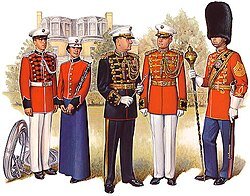
Bandsmen's uniforms are almost always different than regular uniforms. Currently: US Navy USAF US Army USMC 19th century military bandsmen in Europe had "swallow's nest" shoulders and often a half dozen or more lace chevrons on the sleeves. Or the uniform and facing colors reversed, that is say the regimental colors were light green with red cuffs and facings, the bandsmen would have a red tunic with light green cuffs and facings. Examples of swallow's nest and chevrons: The reason was so they could be quickly identified by officers because it was the drummers or buglers were the ones that sounded the orders
.jpeg.d67013d6a2255b4128f0b4952dd1a72f.jpeg)


.jpeg.dcb81ca7b47ff96ce2fed81fe660f2e1.jpeg)
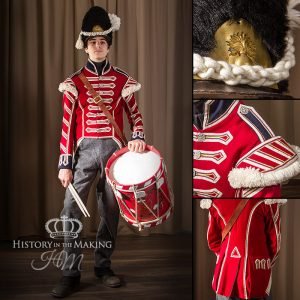
-
Good stuff, Maynard!
-
Whereas many, myself included, say that the writers of our Constitution saw the folly of that and internationally left out "perpetual," then reinforced it with the 10th Amendment. Witness that 3 times New England states threatened secession, and there was no talk about it being treason, unconstitutional, or illegal. Jefferson said, "the several states who formed that instrument (the U.S. Constitution), being sovereign and independent, have the unquestionable right to judge of its infraction…” That is, secession is an inherent right and the states themselves ought to have sovereignty over the decision to secede. John Quincy Adams opined "the people of each state in the Union a right to secede from the confederated Union itself.” As pointed out by @Sedalia Dave above, clauses are left out here and there. But, worse is when the entire thing is subtly reworked into "modern language" to supposedly make it more understandable, but presented as being the original text. Those are usually on various .Gov lesson plans and aimed at students.
-
Ware?
-
It's what, 16°C? Pleasantly invigorating!
-
Blowing the competition out of the water.
-
Found on FB. During the Solomon Islands campaign, a Marine on night sentry duty heard someone approaching in the jungle and fired a few bursts from his machine gun. A voice called out: "Hold up your fire! We are Americans. I am bringing in my platoon." The Marine responded by blasting away with his weapon, wiping out a Japanese patrol. When asked how he knew they were the enemy, he explained that they were "Just too damned grammatical to be Marines." #SeaStorySaturday

- 1 reply
-
- 5
-

-

-
Same here, sort of. A flash of, "What did I do?"and then I recognized the screen. "Ah! That narrow "Required" area for the text. Did a quick check and saw no new comments in any Thread for 5 hours, which confirmed it.
-
LOVE IT! Perfect for family night at the drive-in. I just want to see how it's tarped or covered when not in use.
-
Why Women Live Longer Than Men, Chapter 843
Subdeacon Joe replied to Subdeacon Joe's topic in SASS Wire Saloon
More like the serials in the old SiFi pulps. -
Legal if you have a commercial license for doubles. Maybe only one driver. Maybe wanting to save money on fuel, driving only one rather than two. Or, if two people have CDLs, split the driving.
-
@Hardpan Curmudgeon SASS #8967 Sign here: X_____________________________ Ingredients 1/2 cup dried figs chopped 1/2 cup dried dates chopped 1/2 cup almonds toasted 1/2 cup walnuts chopped 3/4 cup all-purpose flour 1 tsp ground cinnamon 1/2 tsp ground cloves 1/2 tsp ground coriander 1/4 tsp ground black pepper 1/2 cup honey 1/4 cup sugar 1 tbsp butter Zest of 1 orange Optional: thin orange slices for garnish Preheat oven to 300°F (150°C). Line a small round baking tin with parchment paper. In a bowl, combine figs, dates, nuts, flour, and all the spices including orange zest. In a saucepan, gently heat butter, honey, and sugar until the sugar dissolves and the mixture bubbles slightly. Pour the honey mixture into the dry mix and stir to form a thick, sticky dough. Press the dough into the prepared pan and flatten evenly. Bake for 30–35 minutes, then let cool completely before slicing into wedges. Top with orange slices for garnish (optional)
-
Well.....the Egyptians had a fruitcake ca. 2,000 BC. Greeks had a fruit & cheese bread in antiquity. Romans had something like a cross between fruitcake and panforte. Those all seem to have been offerings in religious rites. Around AD 600 the English had "plum cake" which was a sweet, dense cake with dried fruits, nuts, and some spices. Associated with Christmas. So, I don't think it's so much that panforte "devolved" into modern fruitcake, but it developed as a type of fruitcake that was suitable for travelers.