Jump to content
SASS Wire Forum

Buckshot Bear

Members
  • Posts

    11,614
  • Joined

  • Last visited

  • Days Won

    99

Everything posted by Buckshot Bear

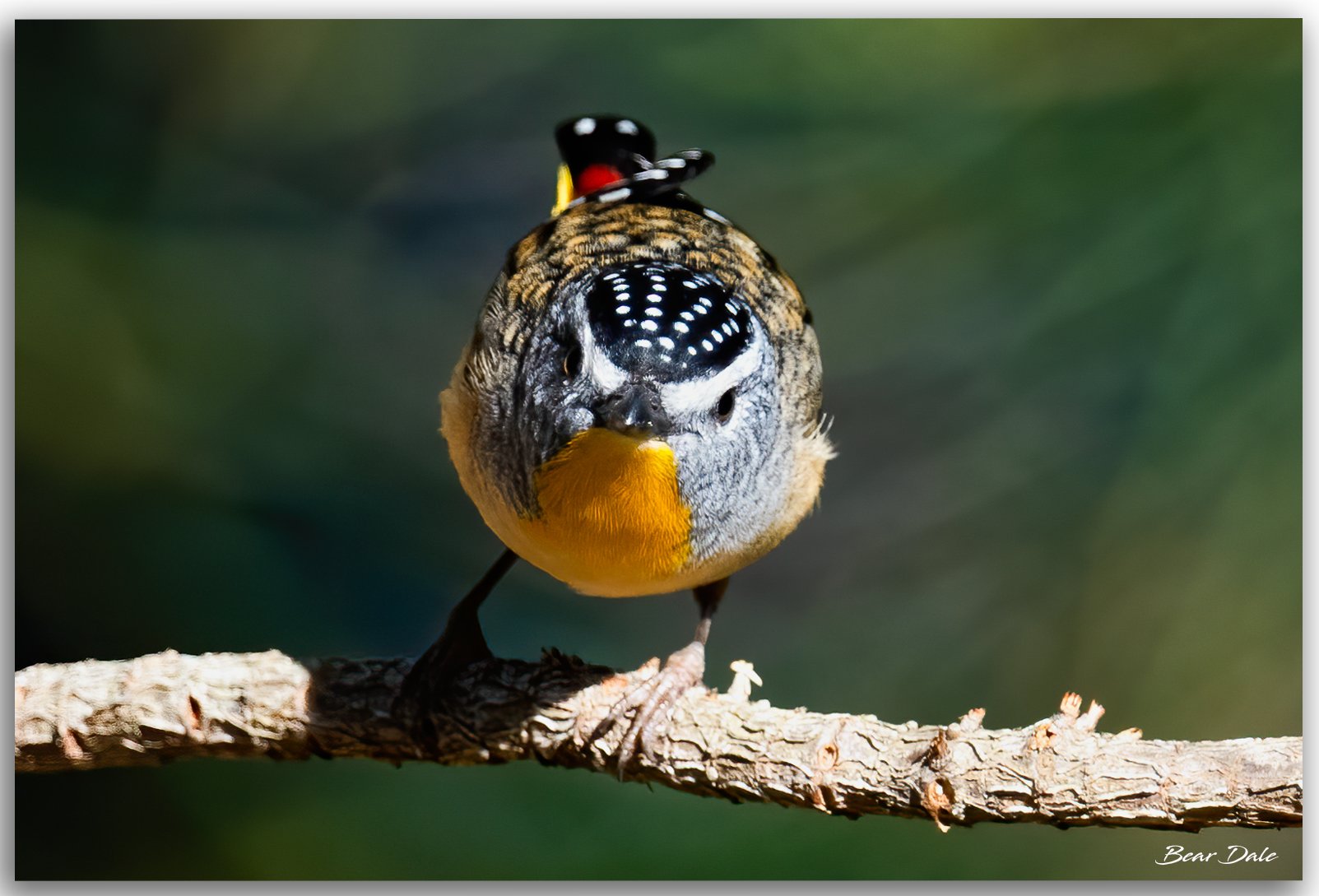
  1. That would have been an awesome sight to see!
  2. Thanks pards, at steam engine events there's always a few fella's that drag along full sized ones and the sound they make is just lovely to hear. Because they had water hoppers, when they got superseded by (mostly) electric motors and other petrol engines, a lot were just left without any love and in freezing conditions the hoppers split. Also in WWII in the iron/steel drives for the war effort thousands upon thousands of H&M engines were scrapped. Its great that so many were saved and are seen running at large events.
  3. This might interest some pards. First Run of my B01 Ball Top Monitor Hit & Miss Engine Really no really taken with how awesome this engine just looks and runs! I have about a dozen or so Hit & Miss engines (my plan of course was to only ever have one!!!) But this is absolutely at the top of the pile an instant favourite!!!
  4. And a home hobbyist from 1954...... He was wearing a tie around machinery as well and no safety glasses and she looked like she could have poked both his eyes out at the same time!
  5. W10 will still be supported by paid subscription for patches etc etc for some years.
  6. A young Mel Gibson many times. Olivia Newton John Marcia Hines
  7. The 2 Ned Kelly's. Glenrowan Vic & Maryborough Qld. Such is Life!
  8. How an Aussie icon dresses to meet the past British Monach.
  9. No one really knows the origin of neenish tarts, the bi-coloured pastries still widely available in Aussie cake shops. The first known mention of ‘nenish cakes’ is in an advertisement for the New South Wales Ice and Fresh Food Company in 1895. In 1901 a columnist calling herself ‘Housewife’ published a recipe in The Sydney Mail and New South Wales Advertiser. The recipe was evidently new, as she remarked that she hadn’t had time to test it. There is a persistent legend around the invention of neenish tarts, involving one Ruby Neenish in the NSW town of Grong Grong. The story has it that she ran out of chocolate icing when preparing tarts for a kitchen tea, so used half chocolate and half white icing. These accounts, however, usually give a date of 1913 – clearly disqualifying the mythical Mrs Neenish as the inventor. In 2016, ABC journalist Rachel Carbonell tracked down the source of the story: it turned out to be a joke played by a former Grong Grong resident on one of his journalist friends back in 1988. The internet being what it is, the legend has since been widely circulated as fact. The two-tone icing of a neenish tart is replicated in a cookie native to New York. At first glance, black and white cookies look just the same, but instead of cream-filled tarts, they are just cake-like cookies with half chocolate, half vanilla icing. The first neenish tarts recipe It seems that neenish tarts (or nenish cakes) were available from commercial bakeries by the turn of the century, but not yet commonly made by home cooks. When ‘Housewife’ published the recipe, she was responding to an enquiry from a reader identified as ‘Obadiah’. Her reply read: I am glad to be able to send you the recipe for which you were so anxious. Very few directions, however, were forwarded me, and as I have no time at present to give the recipe a trial, I am afraid that in some of the details you will have to use your own judgment. I should try with only a quarter of the ingredients, so if your efforts the first time were not successful there would be but little waste. Neenish Tarts : For the shell take 1 lb. ground almonds, ¾ lb. icing sugar, four whites eggs beaten to a froth, one handful flour ; mix these into a stiff paste. Have ready some plain patty pans about the size of a large teacup in circumference and 1 ½ in. in height. Butter them lightly, and with your fingers press in sufficient quantity of the paste to line the tins, taking care that the sides and bottom are quite even and about ½ in. thick. Place in a moderate oven and bake until the tarts are firm and of a pale brown. The details for the frilling [sic] are also rather vague. Take a little fresh butter and mix with it some thick sweet custard. On the top of the whole put the thinnest layer of icing made with white of egg and icing sugar, one half to be coloured with strong coffee. I shall be quite anxious to hear how you succeed. Will you let me know.’ Unlike later recipes, the key features of this version of Neenish tarts were a thick almond base and a custard, not a cream filling. The icing was coloured with coffee, not with chocolate. Over the next few years, the recipe reappeared with more detail on how to achieve the bi-coloured icing. A recipe in Launceston’s Daily Telegraph in 1903 suggested a yellow and brown combination: With coffee, color one-half a pale yellow and the other half a deep brown. Ice the tarts carefully, having the top of each half dark and the other half light, without allowing the two colors to run into each other. In 1906, ‘Housewife’ went into even more detail: On the top of this [filling] spread a layer of icing, made with white of egg and icing sugar. For the coloured half, have ready some rather thin coffee icing. Take the tart in the left hand, dip a knife in the coffee icing, and as quickly as possible lay the knife half way across the tart, and pull it rapidly backwards towards the right. If this is done quickly, the coffee icing will go on with a straight line right across the centre of the white icing, and there will be none spilt during the process. Neenish tarts and the A. B. C. Tea Rooms ‘Housewife’ made no comment in 1901 about the origins of her neenish tarts recipe. However, a column she wrote for the same newspaper 26 years later revealed that she obtained it from a ‘member of the firm’ of A. B. C. Company. The Aerated Bread Company was founded in England in 1862 by Dr John Dauglish, who invented a way of causing bread to rise without yeast. From 1864, the company operated a chain of tea rooms, the A. B. C. Tea Rooms – an operation that extended to Australia. In Sydney, A. B. C. became a leading catering company, operating bakeries, a ballroom and tea shops. Neenish tarts didn’t feature on the UK menu, but ‘Housewife’ emphasises the authenticity of her recipe. She mentions that she concurrently obtained recipes for Othellos and Desdemonas. These little biscuits represent a further variation on the two-tone theme, featuring brown icing (Othellos) and white icing (Desdemonas). The recipe evolves Over the years, the recipe for neenish tarts has gradually changed and exotic variations have been introduced. By 1929, a pink and white icing combination was an option, while the brown icing was chocolate rather than coffee-flavoured. The custard filling had been replaced by a mix of cream, milk, gelatine, sugar and vanilla essence. By 1953, the pink and brown colour combination had made an appearance in recipes. In 1956 a Women’s Weekly recipe dispensed with almonds in the crust altogether and specified a filling of cake crumbs, egg yolk, condensed milk and flavourings. In 1963, in a travesty of the original recipe, Pineapple Neenish Tarts featured in the Weekly’s “Ten Menus for the Modern Hostess” by Leila Howard. ‘Neenish’ still a mystery All this, however, fails to shed light on the origin of the name ‘neenish’. The recipe has been found in some cookbooks (including one from the CWA) spelled ‘nienich’. Are there German origins? Did the A.B.C. employ a continental pastry cook? Does the name derive from a Hungarian surname? Another theory that has been advanced is that it’s an anglicised version of Niniche – the title of a naughty French musical play (vaudeville-operétte) that was first performed in Paris in 1878. The play was originally banned in England, to the prim satisfaction of the reporter for The Sydney Mail. If we have Othellos and Desdemonas named after the Shakespearean characters, is the name neenish another theatrical allusion? So far, no one can say for sure.
  10. Pretty low numbers compared to kangaroo deaths by gunfire down here.
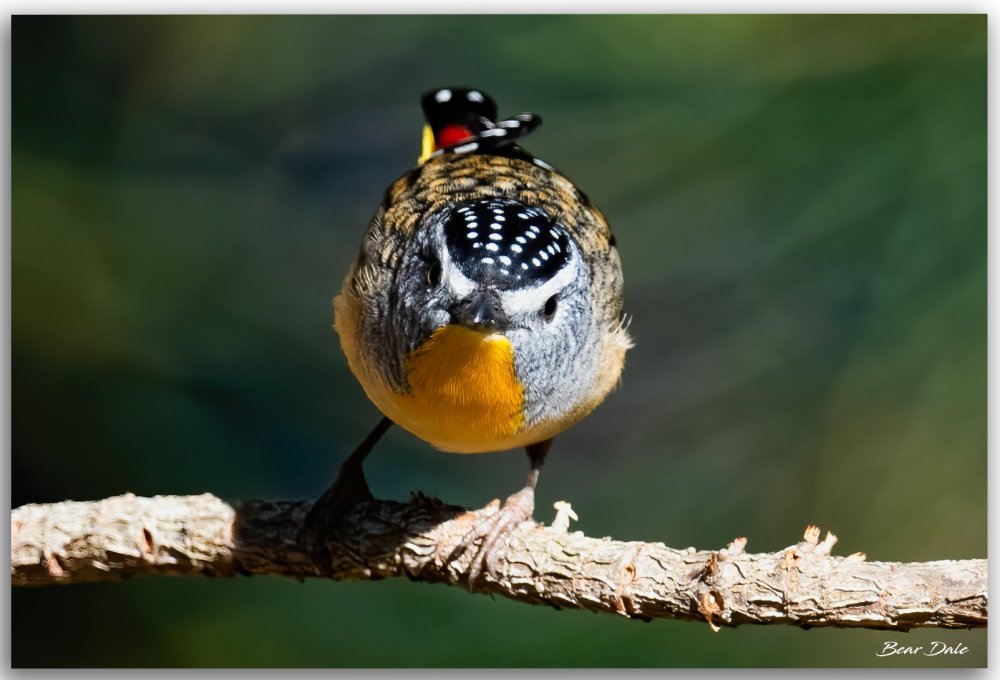
  11. Looks to be a Satin Bowerbird to me.
  12. Appreciate the replies pards.
  13. On This Day Monday, September 20, 1880. : Australian pioneer in physical therapy for polio sufferers, Sister Elizabeth Kenny, is born. Australian nurse Elizabeth Kenny was a pioneer in physical therapy. Born on 20 September 1880 at Kelly’s Gully, a township just west of the New South Wales town of Warialda, her family then moved to the small town of Nobby on the Darling Downs, near Toowoomba, Queensland. An accident during her teenage years, in which she broke her wrist, sparked her interest in anatomy. Whilst recovering, Elizabeth keenly questioned her doctor and mentor, Dr. Aeneas McDonnell, about the workings of the human body. Though untrained, in 1911 she began working as a bush nurse in the area, even starting up a hospital in nearby Clifton. At the outbreak of World War I, she volunteered to serve as a nurse. Due to the dire need for nurses, the untrained Kenny was accepted to work on soldier transport ships, and the experience she gained in this venture earned her the official title of “Sister”. Sister Kenny continued to work as a nurse after the war, and even improved the design of stretchers used in ambulances on the Darling Downs. Marketing the stretcher as the “Sylvie Stretcher”, Kenny gave the profits to the Australian Country Women’s Association who managed sales and manufacture of the invention. Her initiative gained the attention of a family on a cattle station near Townsville, who arranged for her to come and care for their daughter who had been disabled by polio. Her methods of care and treatment enabled the girl to completely recover. She gradually achieved acclaim for her methods by the many polio-stricken children she treated and cured, but criticism from the medical fraternity for her lack of training. Unlike other methods of the time, Kenny’s treatment opposed immobilising affected limbs with casts or braces. She advocated treating children during the acute stage of polio and using hot compresses. However, doctors would not permit her to treat patients until after the first stage of the disease or until muscle spasms had ceased. Instead, she designed a programme of passive exercises to stimulate function. Kenny’s pioneering methods were gradually adopted by more physicians as she travelled to the USA to promote them. During her 11-year stay in America, she opened numerous Kenny Treatment Centres. Although her processes were criticised by many doctors, her dramatic results in affected children spoke for themselves. Her lasting legacy is her methodology for rehabilitating muscles, which formed the foundation for physical therapy, or what is commonly known as physiotherapy. Kenny returned to Australia in 1951, and died on 30 November 1952. Her grave lies in Nobby Cemetery.
×
×
  • Create New...

Important Information

By using this site, you agree to our Terms of Use.