

Subdeacon Joe
-
Posts
53,492 -
Joined
-
Last visited
-
Days Won
631
Content Type
Profiles
Forums
Events
Posts posted by Subdeacon Joe
-
-
-
21 minutes ago, Buckshot Bear said:

JOE! GET AWAY FROM THE KEYBOARD!
-
 5
5
-
-
Color original.
-
 1
1
-
 1
1
-
-
From the Buzz Aldrin Facebook page
Officially starting the countdown to the anniversary of #Apollo11 today. You may recall that a few months ago, India’s Space Research Organization moon orbiter Chandrayaan 2 captured photos of both the Apollo 11 and Apollo 12 lunar modules on the Moon’s surface. They may be small in size – but those landers represent one of humankind’s most noble and successful accomplishments.

-
1
-
4
-
-
Oh, how I wish! Elegant!

-
2
-
-
2 hours ago, Eyesa Horg said:
Not sure if it was funny or just flat stupid!
Why can't it be both at once?

I get a kick out of the out of shape, middle aged folks trying to imitate young people who look like gymnasts or professional dancers.
48 minutes ago, Eyesa Horg said:Notice they all live in almost empty houses!
Or were smart enough to move stuff out of the way. Usually because they watched some of the videos of people who DIDN'T move stuff out of the way.

-
1
-
1
-
-
1 hour ago, MizPete said:
That's kind of the point. BUT Petey likes a bit of wheat flour in so I go along with that. But NO sugar; sorry Subdeacon. I don't doubt that it happened but it's just wrong. Also applies to pups.
It's just a variation. Going on memory, I'd say that roughly 20 out of 50 had some sugar. If you want sugar, put some in. If you don't like sugar, leave it out. Be darned if I'm going to call that many Southern Church Ladies wrong.
When I make it to go with chili, I leave it out, and go about 4:1 cornmeal to flour. If I want it to have some honey or jam on as dessert, it's closer to 3:1, and it gets a couple of tablespoons of sugar.
-
18 hours ago, MizPete said:
From SC: ZERO sugar in the cornbread.
I'm a fan of old, excuse me, VINTAGE
 cookbooks. I'm especially fond of Ladies Auxiliary compilations. I've come across quite a few late 1800s church Ladies cookbooks out of the south and border states that do have cornbread receipts with sugar.
-
If it's a holiday, why put it out for pickup?
With our "waste management specialists" there's some sort of contract between the company and the county so that company has a monopoly on it. A holiday pushes everything by one day. A Tuesday holiday pushes Tuesday to Wednesday, Wednesday to Thursday, etc.
The company sends out text reminders about holiday changes, as well as a weekly reminder the night before pick up.
If for some reason the company misses a pickup (happens 3 or 4 times a year) we leave it out and they get it the next day.
-
Dropping out is just stopping going to class.
Withdrawal is doing it officially, communicating with your councilor and administration, filling out the proper forms.
Think of it like work. A person can just stop showing up, the No Call/No Show bit, or can give notice, or at least go into the boss and say, "I quit."
-
1
-
-
-
28 minutes ago, Stump Water said:
Anybody ever had beans on toast?
On toast, no.
On biscuits, yes.
-
-
A Semi-Assault Rifle?
-
2
-
-
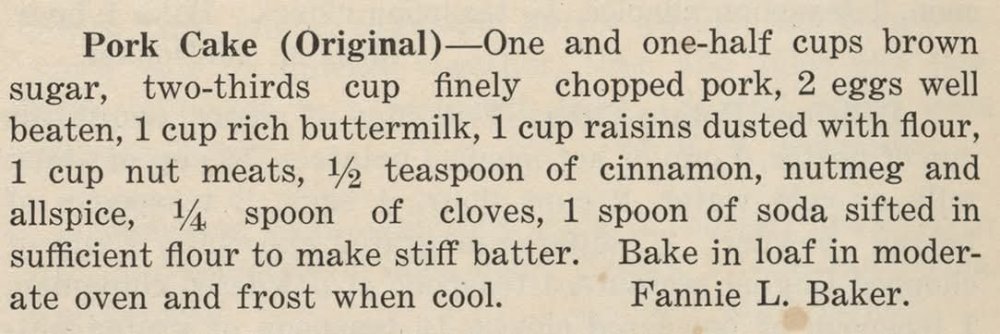
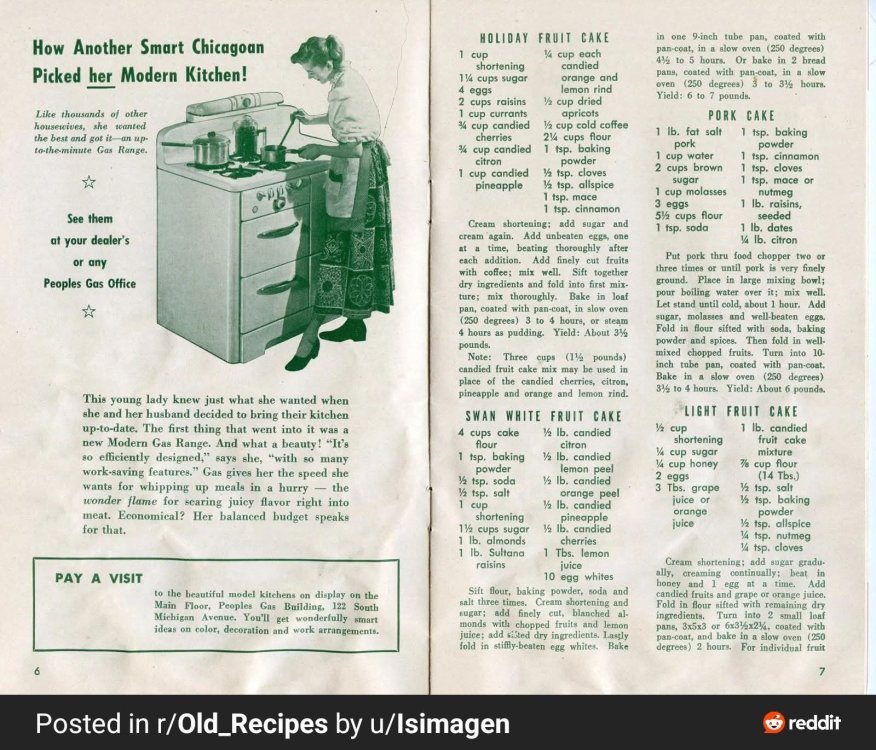
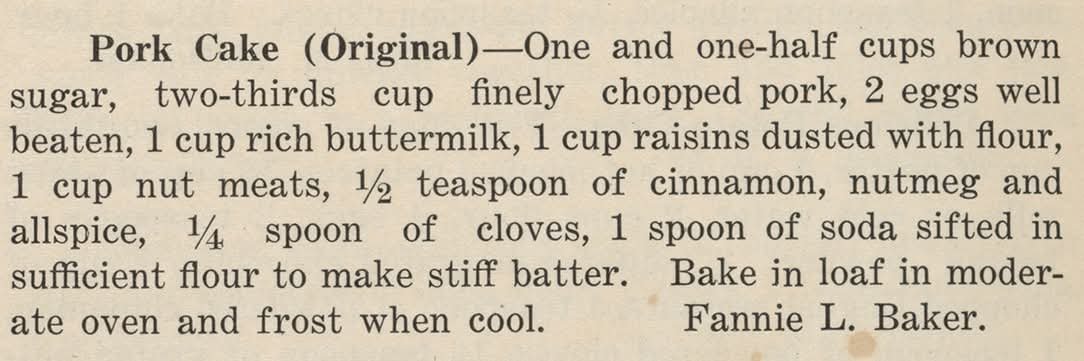
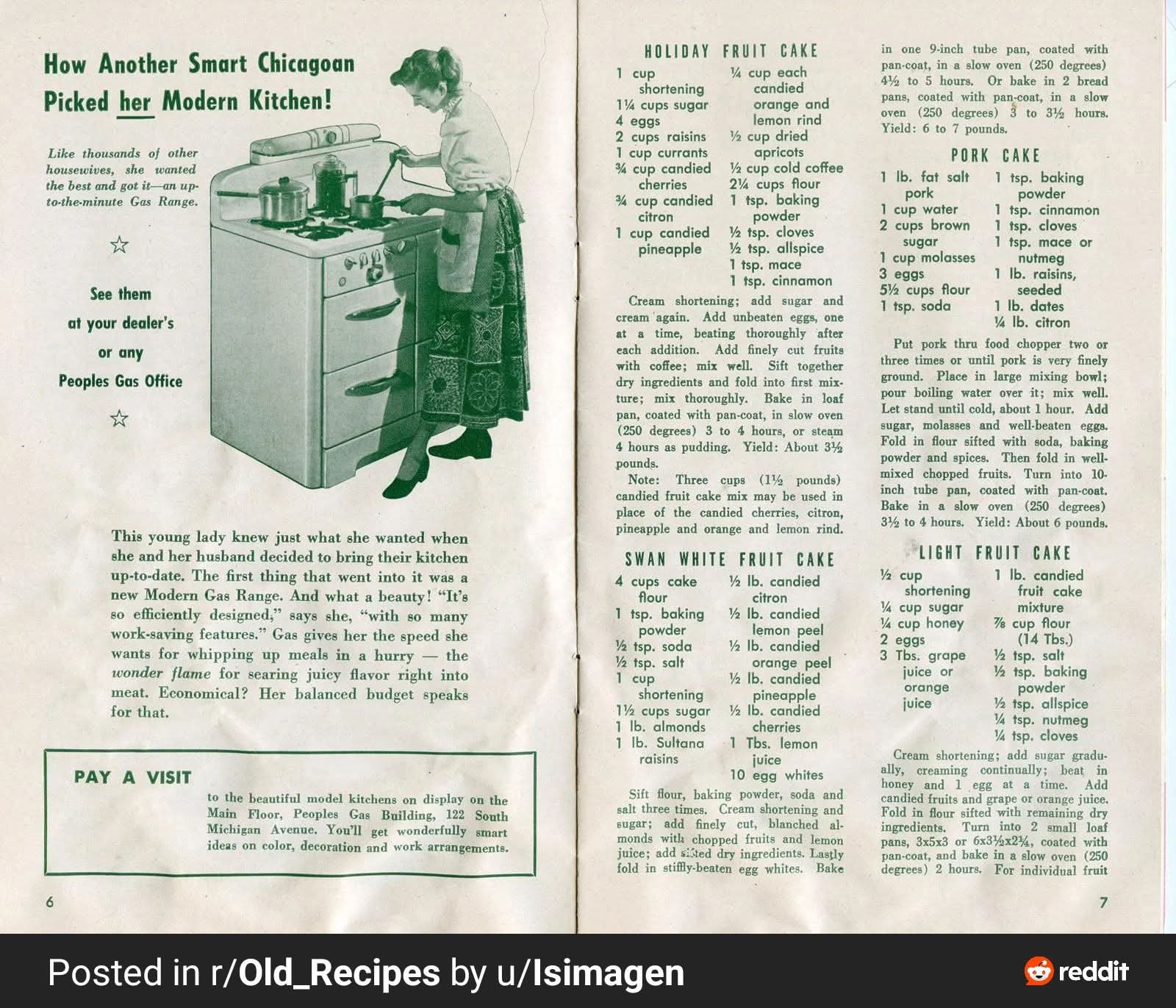
Pork Cake. Almost like asort of Mincemeat Cake. Adding finely diced apples would make it even closer.
-
I read it last year about this time. Along with the Constitution. And some of the southern states articles of secession. And Bryan's "Cross of Gold" speech.
-
1
-
-
1 minute ago, watab kid said:
i dont speak either , the two Norwegian's were too far removed , and my current czeck wife speaks better Japanese as she was raised there , ive already told the ta;le of my german side forbidding me to learn german when i was young - too soon after the war , i speak American English and defer to relatives if they are alive to interpret , i got shortchanged in so many ways - oh well im still here - most of them arent
A Norwegian whole grain bread with the Czech version of paprikash gravy.
-
7 hours ago, J-BAR #18287 said:
Nope.
If it's a good rib, it doesn't need a coat or even sauce. If it's not a good rib, don't eat it.
Like corn dogs just fine. With mustard.
Your not looking at it right. Let's you hold your rib and cornbread in one hand and your beverage of choice in the other as you wander and mingle.
-
2
-
2
-
-
55 minutes ago, Forty Rod SASS 3935 said:
Please tell me that isn't another publicly funded California wet dream.
There's no plan to revive the railroad.
The museum in Sacramento is funded in part by the State Parks.
If No. 9 is put on static display I suspect that it would be funded mostly by one or more "Friends of...." groups, in conjunction with National Parks, State Parks, or some Marin County or Mill Valley park system.
-
2
-
-
2 minutes ago, watab kid said:
too many norwegion wives and my czech ne wont try it
So.... kneippbrøt and sure na paprice.
-
-
-

-
2
-
1
-
3
-
-
On 7/3/2025 at 4:03 PM, Buckshot Bear said:
Was that video fake????
Edited, but not fake. To me the point of those videos, with someone asking such simple, basic questions, is to show the general dumbing down of our society. Anyone over the age of 12 should be able to snap out the answers. Not like he's asking for the details of the Treaty of Guadeloupe Hidalgo or the stoichiometry of the combustion of black powder ( KNO3 + S + 3C → K2S + N2 + 3CO2 )
.
On 7/3/2025 at 5:06 PM, Alpo said:Do you suppose it would be racist to point out that nobody was white?
There are plenty of videos of non-melinated people being ignorant.
-
 2
2
-

Hell-Diving, Fathom-Eating
in SASS Wire Saloon
Posted