
Subdeacon Joe
-
Posts
58,860 -
Joined
-
Last visited
-
Days Won
692
Content Type
Profiles
Forums
Events
Posts posted by Subdeacon Joe
-
-
How many riots because the stores ran out of those things?
-
 2
-
-
1 hour ago, Chantry said:
Copilot's response when asked about the 14th Army:
Concise takeaway
The 14th Army was the British‑led multinational force that fought the Burma campaign in WWII. Often called the “Forgotten Army,” it battled the Japanese through some of the harshest terrain and weather on Earth—jungles, mountains, and monsoon conditions—ultimately liberating Burma in 1945.
⚔️ What the 14th Army Was
-
Formed: 1943
-
Commander: Primarily General William Slim
-
Composition: British, Indian, African, Burmese, and Gurkha troops
-
Theater: Burma (Myanmar), Assam, Bengal, and parts of India
-
Opponents: Japanese 15th Army and Burma Area Army
It was one of the largest Allied armies of WWII—over 1 million troops at its peak.
🌧️ Why the Monsoon Matters (and connects to your current tab)
Your active tab is about Burma’s monsoon climate—heavy rains from mid‑May to late October, extreme humidity, flooding, and impassable terrain . This climate shaped the 14th Army’s entire campaign:
-
Roads dissolved into mud
-
Rivers flooded and cut supply lines
-
Disease (malaria, dysentery, dengue) was rampant
-
Air supply became essential
-
Movement slowed to a crawl
Slim’s army had to master the monsoon to defeat the Japanese, who initially used the weather to their advantage.
🧭 Key Campaigns
Arakan Campaigns (1942–45)
Early failures taught Slim how to fight in jungle and monsoon conditions.
Imphal & Kohima (1944)
Often called the “Stalingrad of the East.” The 14th Army stopped the Japanese invasion of India and inflicted catastrophic losses.
Advance into Burma (1945)
-
Crossing the Irrawaddy River
-
Capture of Mandalay
-
Liberation of Rangoon This broke Japanese control of Burma and ended major fighting in the theater.
🧠 Why It Was Called the “Forgotten Army”
Despite enormous size and strategic importance, the 14th Army received little attention compared to Europe or the Pacific islands. Reasons include:
-
Distance from Western media
-
Fighting in remote jungles
-
Overshadowed by European campaigns
-
Monsoon seasons slowing operations and news coverage
Slim famously reminded his troops:
“We are not forgotten. We are doing something important.”
🏅 Legacy
-
One of WWII’s most successful multinational armies
-
Slim is considered one of the war’s best commanders
-
The campaign proved the effectiveness of air supply and jungle warfare tactics
-
It paved the way for postwar independence movements in South and Southeast Asia
I can't resist doing this:
OHMYGAWD!!! That's generated by an AI!!! Can't be accurate!!!! OHMYGAWD!!!
Yes, that's sarcasm.
-
-
For buying TWO medium or larger drinks.

-
1
-
 1
-
-
As long as you check other sources, I see nothing wrong with AI. Just as you don't rely on just one news source, or one encyclopedia. Too much OHMYGAWD!!!ism about it, as there was with Photoshop, CGI, Wikipedia, etc. etc. etc.
Looks like a combination of information from:
and
https://en.wikipedia.org/wiki/USS_Fletcher_(DD-445)
-

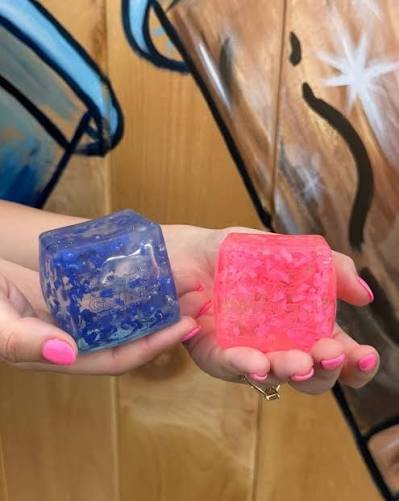
For these ???
-
1
-
 1
-
-
-
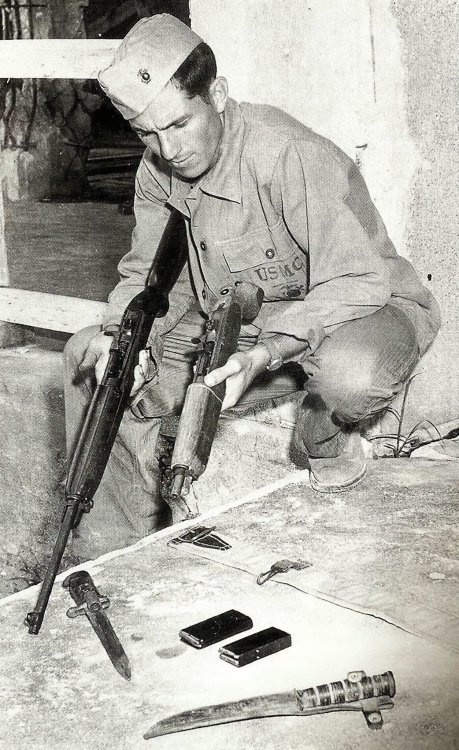
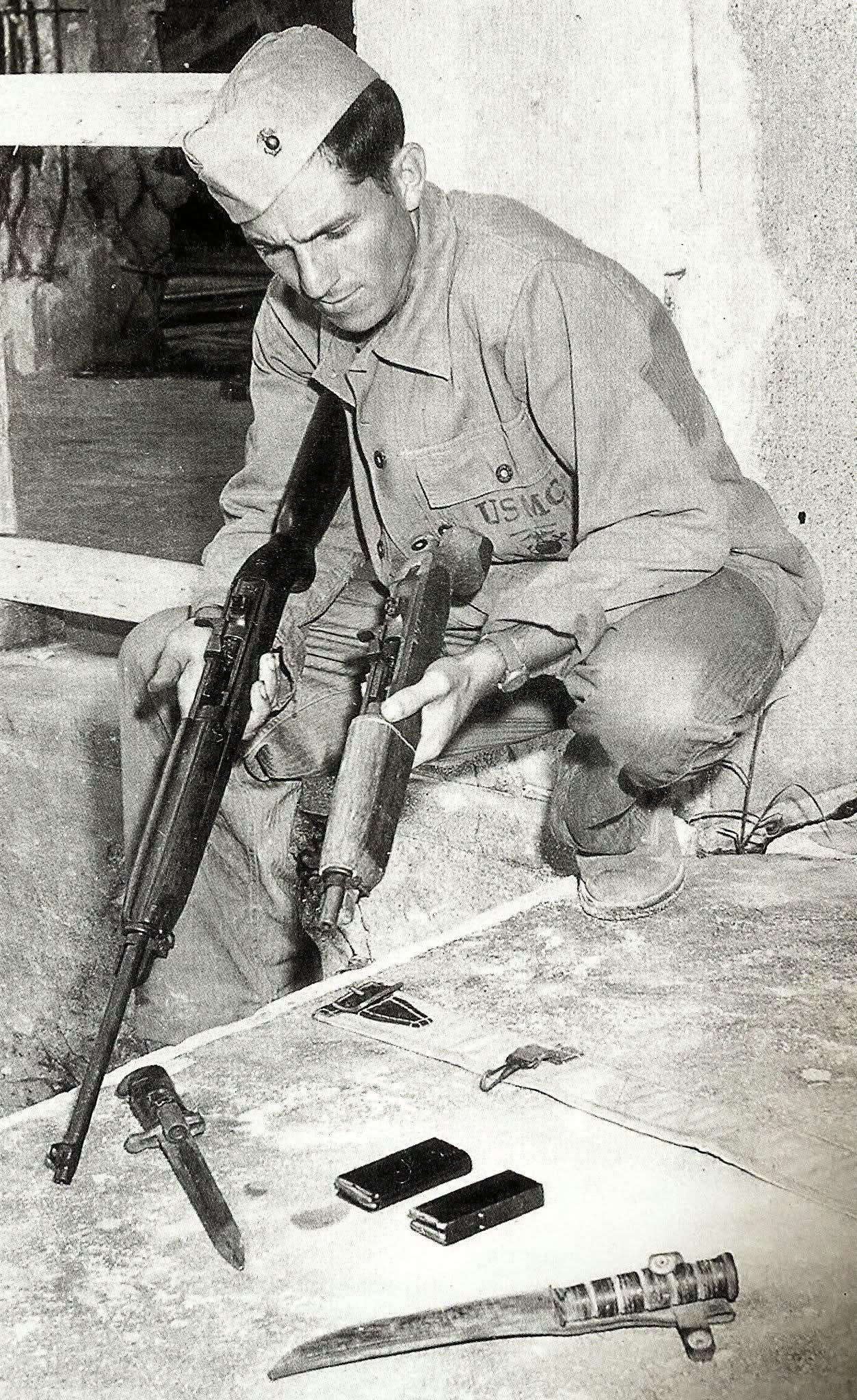
From FB.
This photograph, originally featured in Bruce Canfield's U.S. Small Arms of World War II, shows a U.S. Marine Corps (USMC) officer during the Battle of Peleliu in 1944. The weapon in his left hand is an extraordinary example of battlefield improvisation. An M1 that was captured by Japanese forces, chopped down, and converted to fire full auto.
Japanese soldiers holed up in Peleliu's intricate cave systems managed to convert captured semi-automatic American M1 Carbines into select-fire or fully automatic weapons. To make them easier to handle and conceal within the tight, pitch-black confines of the caves, they crudely sawed off the buttstock and chopped down the barrel. What makes this modification particularly interesting is that the US military did not officially standardize its own select-fire variant (the M2 Carbine) until late 1944, meaning these Japanese field-expedient conversions actually predated widespread deployment of America's own factory full-auto carbines.
Laid out on the canvas map in front of the Marine are a couple of standard 15-round .30 Carbine stick magazines and an M4 bayonet/knife, which was standard issue for the M1 Carbine starting in mid-1944.
-
3
-
 2
-
-
-
9 hours ago, irish ike, SASS #43615 said:
 The answer is 3!
You didn't carry the 2.
-
1
-
-
For years I've been answering "This is Joe." If a person asks "Is this Joseph (surname)?" I answering "Speaking."
I never say "Yes." to anything. "Speaking," "Right," "Correct" and so on.
-
6
-
-
-
-
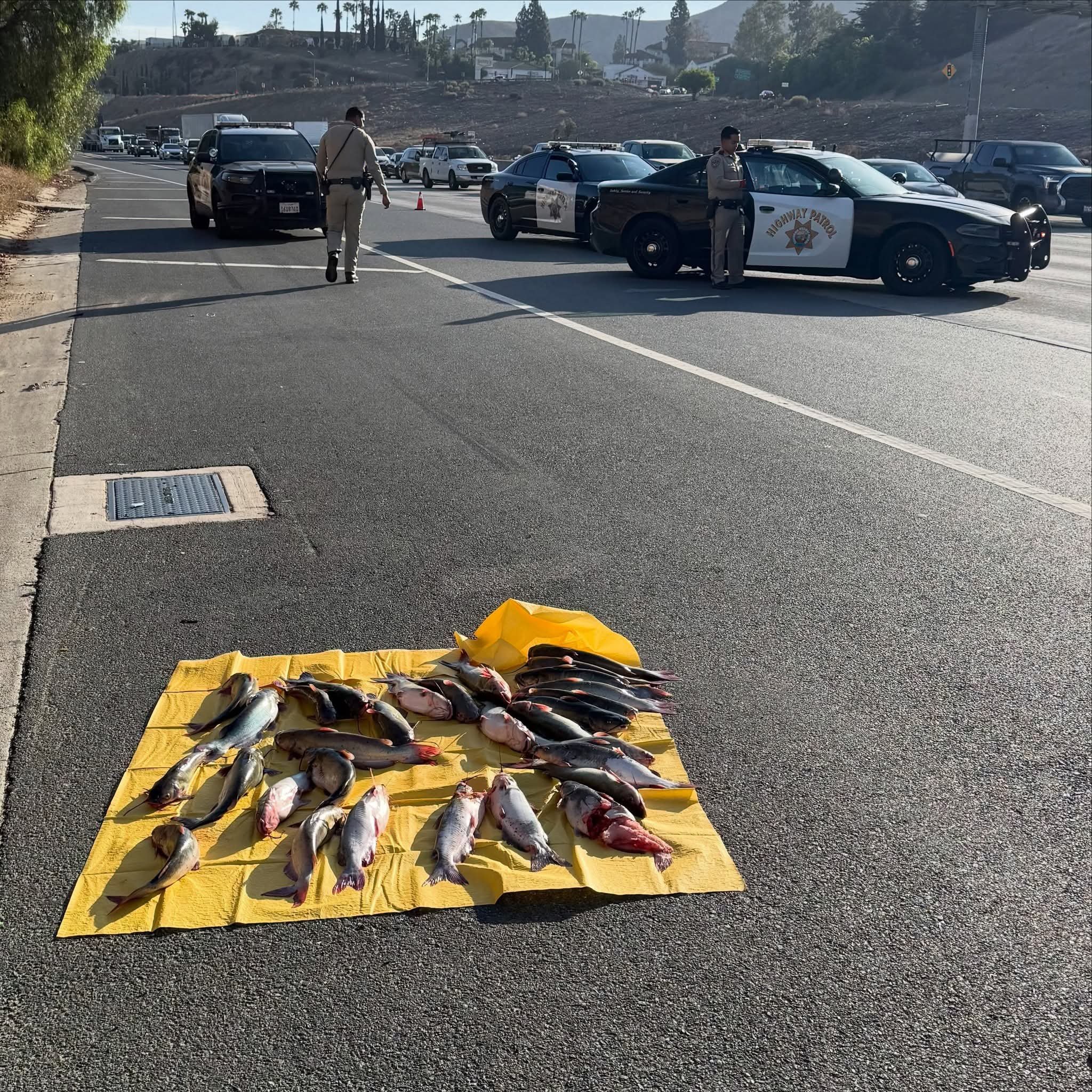
28 minutes ago, John Kloehr said:
Curiosity made me search this one. 29 of the 31 catfish survived.
https://kmph.com/news/local/thirty-one-catfish-crossed-the-road-in-la-county
It's just a photo of.....
Fish and Chips!
-
1
-
3
-
-
-
-
-
-
It's amazing how many people string their bow backwards when starting out.
-
Your 4 up would be blown in under a mile at about 18 to 20 mph.
6 up, after between a mile and a mile and a half at maybe 20 to 22 mph.
Bad guys, two to maybe two and a half miles at 22 to 25 mph.
More likely, though, the bad guys wouldn't gallop at all. Fast canter at 15 to 18 mph, and overtake a few minutes later after the coach had to slow to a walk.
Chase time 2 to 5 minutes.
-
1
-
-
Wait. ..
Doesn't everyone use one for adding ingredients to their stand mixer?
 So much easier than clumsy cups while the mixer is running!

-
1
-
1
-
1
-
-
9 minutes ago, Forty Rod SASS 3935 said:
Another fool who got himself on the net by being a flaming idiot.
Don't get sarcasm, do you. He has a lot of good stuff, much of it debunking the garbage that's in movies and games.
-
-
-
2
-
1
-
 1
-
-
Can the officials who persecuted him be charged with malicious prosecution?
-
1
-


The ACC didn't pay their electric bill
in SASS Wire Saloon
Posted · Edited by Subdeacon Joe
College football conferencespuzzle me. How is Texas Atlantic Coast? Or is it a different SMU?
Wait....
How are Kentucky and CALIFORNIA Atlantic Coast?
CALIFORNIA?????